The role of monitor choice in modern workspaces
When organisations review responsible procurement and energy-efficiency goals, the conversation often focuses on the big-ticket items. Buildings, energy infrastructure, business travel and supply chains.
Yet one of the most common workplace technologies can be found sitting on almost every desk.
The monitor.
Displays play a constant role in day-to-day operations. They consume energy, use materials, require packaging and eventually become part of a technology refresh cycle. While a single monitor may seem insignificant when conversations centre on air miles and EV chargers, the impact becomes much larger when multiplied across hundreds or even thousands of users.
Monitor choice represents an often-overlooked opportunity to improve workplace energy efficiency while supporting smarter technology refreshes.
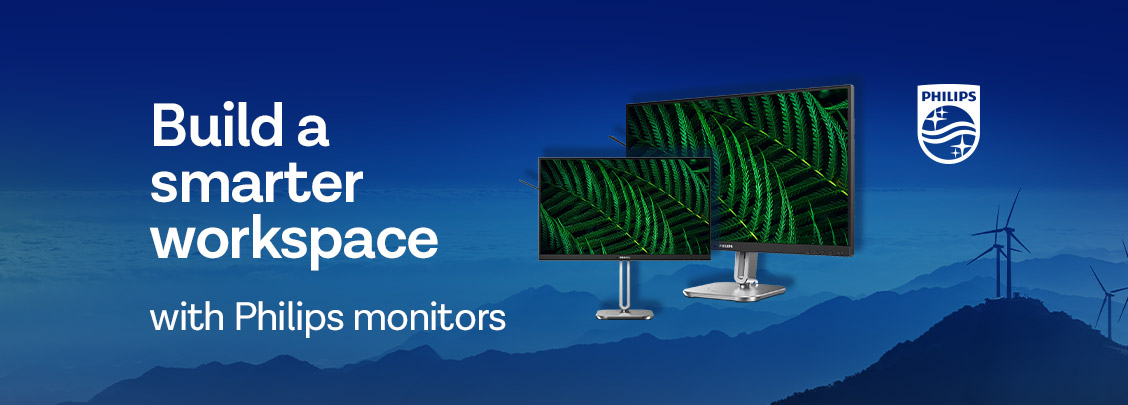
Philips has developed a range of monitors featuring recycled materials, PowerSensor 2 energy-saving technology and USB-C connectivity to help organisations improve workplace performance while reducing energy consumption.
Smarter technology procurement
Today's workplace technology decisions are increasingly shaped by more than performance specifications alone.
Customers are increasingly considering lifecycle credentials, product design and certification alongside traditional performance requirements alongside traditional performance requirements. This is particularly evident across education and public sector environments, where energy efficiency, material-use and certification requirements are often embedded within purchasing frameworks.
The result is a growing demand for business monitor solutions that balance energy-saving technologies, modern design and the performance users expect.
Looking beyond energy consumption
Organisations today evaluate material sourcing, product design, packaging and lifecycle impact alongside traditional performance criteria. Customers want to understand not only how much energy a product uses, but how it has been designed and manufactured in the first place.
This shift is encouraging manufacturers to place greater emphasis on recycled materials, energy-saving technologies and product design, resulting in a new generation of monitors built for today's workplace requirements.
What makes a modern monitor more efficient?
For workplace displays, efficiency is shaped by far more than power consumption alone.
Today's organisations are increasingly considering how products are designed, the materials they use, their energy-saving technologies and the practical benefits they deliver throughout their working life.
Philips monitors with sustainability features are designed to help organisations reduce energy consumption without compromising productivity, connectivity or user experience.
Available in both 24" and 27" formats, including models such as the Philips 24B2G5301 and Philips 27B2G5601, the range combines recycled materials, energy-saving technologies and the features expected from a modern business monitor.
Across the range, key features include:
- Up to 85% post-consumer recycled plastics
- 5% ocean-bound plastic
- 100% recycled aluminium stands
- 100% recyclable packaging materials
- PowerSensor 2 energy-saving technology
Together, these features support workplace energy-efficiency and resource-management goals while delivering the performance, reliability and connectivity expected from today's business displays.
The power of a single cable
Modern workplaces demand reliable connectivity, flexible deployment options and seamless user experiences. That's why several Philips monitors include USB-C connectivity, allowing power, video and data to be delivered through a single cable.
Whether deployed in corporate offices, education environments or public sector organisations, a USB-C monitor can help simplify desk setups, reduce cable clutter and support more efficient hybrid working. For organisations seeking even greater flexibility, a USB-C docking monitor can reduce the need for additional hardware while supporting streamlined device connectivity.
These features work together to deliver a more efficient and productive workspace, without compromising the connectivity and performance modern organisations expect.
Energy efficiency that works in the background
The benefits don't stop once the monitor reaches the desk.
Philips' range of energy-efficient monitors incorporates technologies such as PowerSensor 2, helping optimise energy usage by intelligently responding to user presence. This allows the monitor to reduce unnecessary power consumption when not actively in use, supporting lower energy usage across larger deployments.
Combined with other built-in efficiency features, these technologies help reduce ongoing workplace energy consumption across larger deployments.
Small technology decisions can have a big impact
Few organisations improve workplace efficiency through a single major investment.
More often, progress arrives quietly. One specification. One refresh cycle. One purchasing decision at a time.
Monitor selection may not always be the first area considered, but it presents an opportunity to improve workplace performance and energy use through technologies such as PowerSensor 2, recycled materials and modern connectivity.
Philips monitors with recycled materials and energy-saving features help organisations create more efficient workspaces without compromising productivity or performance.
Learn more about Philips Monitors
Visit the Philips hub to discover how Philips monitors support workplace, education and public sector projects with recycled materials and energy-saving technologies. Backed by Midwich expertise, you can confidently specify the right Philips monitor for your next project.
For more information, contact: sam.baldry@midwich.com
Interested in the bigger picture?
Responsible business is also a key focus across Midwich. Explore our sustainability commitments and discover how we're working to create a more responsible future for technology across our business, partners and customers.


